
"After earning the BSSC certificate, I was promoted to Pharmacy Stock Clerk at Netcare Olivedale Hospital. Completing the PPIM program earned me another promotion to Theatre Stock Controller at Netcare Waterfall City Hospital. The skills I gained through SAPICS courses and Marieta’s mentorship have opened many doors for me. I was even headhunted for a position"
Raymond Ramaoka, Netcare Limited
"I studied the following SAPICS courses, Basics of Stores & Stock Control (BSSC) and Principles of production & Inventory Management (PPIM), through Marieta Glas Consulting & Training; Both courses have been transformative for me, not only in my career but also in my personal development. They equipped me with the tools and confidence to secure my dream job as a Stock Controller, a role I had aspired to for a long time. Beyond the job itself, these courses have sharpened my forecasting skills, which I now use daily to excel at work and even in planning my personal life. The practical knowledge and strategic thinking I gained have had a lasting impact on how I approach challenges and make decisions."
Thato Mokoena, Stock Controller, Netcare Limited
Introduction
The warehouse, stores and distribution centre are critical links in the modern supply chain. They ensure that the right materials, components, products, and supplies are available when needed, where needed, and in the right condition.
Effective stores and stock control have a direct impact on operational efficiency, working capital, customer service and business continuity. Poor stock control can result in shortages, excess inventory, damaged materials, production delays, unnecessary costs and dissatisfied customers.
For this reason, organisations need people who understand not only how to store and issue materials, but also why effective stores management matters to the business as a whole.
The Basics of Stores and Stock Control course provides participants with a practical foundation in the principles, practices and responsibilities involved in modern warehousing, stores and distribution operations.
About the Course
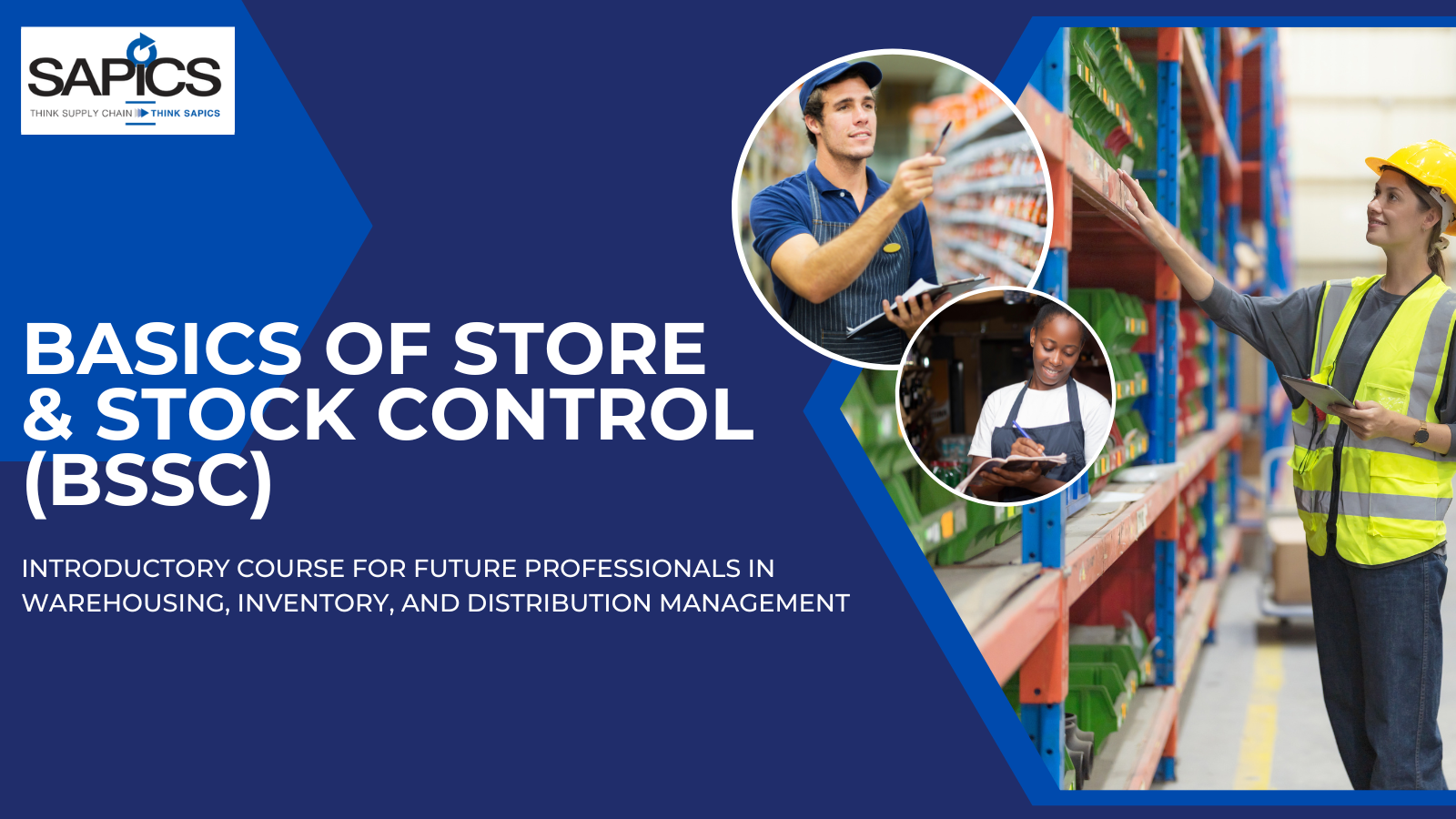
Basics of Stores and Stock Control is a practical foundation course designed for people entering or already working in the many areas of warehousing, stores, inventory, and distribution.
The course introduces the essential knowledge and skills required to work effectively in a modern stores or warehouse environment. It also helps participants understand how their work connects with purchasing, production, maintenance, logistics, distribution and the organisation's customers.
Whether you are new to stores and warehousing or an experienced employee looking to strengthen your knowledge, this course provides a solid foundation for improved workplace performance and future development.
Who Would Benefit from Attending?
The course is particularly suited to:
- Store persons, storemen and warehouse personnel
- Warehouse and stores supervisors
- First-line supervisors and team leaders
- Employees moving into stores or warehouse responsibilities
- Production and manufacturing personnel who depend on stores
- Maintenance personnel who use and manage spare parts
- Purchasing and procurement personnel
- Inventory and materials personnel
- Other employees who interact regularly with the stores function
By developing a common understanding of stores and stock control, the course can also help improve communication and cooperation between the stores function and its internal customers.
Entry Requirements
There are no formal prerequisites for entry into the programme.
Basic literacy and numeracy skills are recommended so that participants can comfortably work with course materials, stock information and basic calculations.
What Will Participants Gain?
On completion of the course, participants will have a better understanding of how to:
- Explain the role of stores and warehousing within the supply chain
- Understand the responsibilities of stores personnel and their internal customers
- Apply basic principles of warehouse safety and risk management
- Receive, identify, classify, store and issue materials correctly
- Understand stock coding and classification
- Make better use of warehouse space and storage equipment
- Contribute to accurate stocktaking and stock control
- Handle warehouse issues, returns and reverse logistics
- Understand the relationship between warehousing, transportation and distribution
- Respond appropriately to warehouse emergencies
- Recognise how effective stores management contributes to productivity, cost control and customer service
BSSC Course Outline
The course consists of 13 learning modules followed by a final examination:
- Warehousing and Supply Chain Management
- Roles, Responsibilities and Relationships
- Risk and Safety Management
- Warehouse Safety and Personal Protective Equipment
- Inbound Logistics
- Classifying and Coding of Stock
- Warehouse Layout and Productivity
- Materials Handling and Storage Equipment
- Stocktaking and Stock Audits
- Warehouse Issues
- Warehouse Returns, Customer Service and Reverse Logistics
- Transportation and Distribution Management
- Emergency Situations and Precautions
- Final Examination
Flexible Learning Options
The course is non-unit-standard-aligned and non-accredited, providing organisations and individuals with a practical learning programme without the formal requirements associated with an accredited qualification.
Participants can choose the learning approach that best suits their circumstances:
Instructor-Led Training
Ideal for organisations wanting a structured learning experience with direct interaction between the instructor and participants.
- Experienced instructors guide participants through the course
- Structured classroom learning helps participants stay focused and on track
- Group discussion and practical examples reinforce learning
- Participants can ask questions and discuss workplace challenges
- Particularly suitable for company-based group training
- Contact time: 42 hours, including the final examination
Online Instructor-Led Training
Provides the benefits of instructor-led learning without the need to travel to a training venue.
- Experienced instructors deliver the programme online
- Platforms supported include Zoom, Microsoft Teams and Google Meet
- Interactive learning environment suitable for individuals and small groups
- Participants can engage directly with the instructor and other learners
- Reduces travel time and associated costs
- Contact time: 42 hours
- Final examination is proctored
Self-Study
Designed for participants who require maximum flexibility and want to fit their learning around work and personal commitments.
- Study from home, work or while travelling
- Learn at your own pace
- Avoid travel to a training venue
- Reduce time and travel costs
- Access tutoring support if required
- Suitable for individuals who prefer independent learning
- Final examination is proctored
Assessment and Certificate
- Learning is assessed through a final examination, supported by required homework activities.
- Participants who meet the prescribed assessment requirements will receive a Certificate of Achievement.
- The assessments are designed to confirm that participants have understood the key principles covered during the programme and can apply their knowledge to production and inventory management situations.
Where homework forms part of the selected learning programme, the participant must also achieve a minimum combined score of 50% across the homework and the final examination.
Why Choose Basics of Stores and Stock Control?
Effective stores and stock control are not simply about putting materials on shelves.
They are about having the right materials available at the right time, controlling stock accurately, protecting company assets, supporting operations and providing reliable service to internal and external customers.
This course gives participants the practical foundation they need to understand their role, perform their responsibilities more effectively and contribute to a more efficient and responsive supply chain.